investment, how to make money with survey, seo, reading email, clicking ads, social media, links, internet, profit always, get high ranking, visitors and traffic,
The WordPress tips and hacks mentioned below apply to a self-hosted installation of WordPress. You may skip if your WordPress blog is hosted on WordPress.com and not WordPress.org.
Tip 0: Change the Default Image Upload Folder
The default installation of WordPress will store all your images inside wp-content/uploads folder.
Presenting the 101 most useful websites of 2012. These sites, well most of them, solve at least one problem really well and they all have simple web addresses (URLs) that you can memorize thus saving you a trip to Google.
The Most Useful Websites and Web Apps
screenr.com – record movies of your desktop and send them straight to YouTube.
Do a simple Google search like “proxy servers” and you’ll find dozens of PHP proxy scriptson the Internet that will help you create proxy servers in minutes for free. The only limitation with PHP based proxies is that you require a web server to host the proxy scripts and second, you also need a domain name to act as an address for your proxy site.
If you don’t own a domain or server space, you can still create a personal proxy server for free and that too without requiring any technical knowledge.
Create a Free Proxy Server with Google App Engine
Here’s one such proxy site that you can build for your friends in China or even for your personal use (say for accessing blocked sites from office). This is created using Google App Engine and, contrary to what you may think, the setup is quite simple.
Step 2: Click the “Create an Application” button. Since this is your first time, Google will send a verification code via SMS to your mobile phone number. Type the code and you’re all set to create apps with Google App Engine.
Step 3: Choose a sub-domain* that will host your proxy server. Make sure the domain is available, agree to the Google Terms and click save. The sub-domain is also your App ID that will uniquely identify your proxy application.
For this example, we’ll use labnol-proxy-server as the App ID though you are free to choose any other unique name.
Step 4: OK, now that we have reserved the ID, it’s time to create and upload the proxy server application to Google App Engine. Go to python.org, download the 2.6.4 MSI Installer and install Python.
Step 5: Once Python is installed, go to code.google.com, download the Google App Engine SDK for Python and install it.
Step 6: Download this zip file and extract it to some folder on your desktop. The zip file, for the curious, contains a couple of text files (written in HTML and Python) that you can read with notepad.
Step 7: Start the Google App Engine Launcher program from the desktop and set the right values under Edit – > Preferences (see screenshot above).
Step 8. Click File – > Add Existing Application under the Google App Launcher program and browse to the directory that you created in Step 6. Click the Edit button and replace “YOUR_APP_ID” with the ID (sub-domain) that you reserved in Step 3.
Step 9: Click Deploy and your online proxy server is now ready for use.
Visual Tour – Setting up a Free Proxy with Google
You can edit the main.html file to change the appearance of your proxy server and you can even add Analytics and AdSense code to your proxy server in case it gets popular on the web.
The application is currently open to all users but you can add a layer of authentication so that only users who are logged-in into their Google Accounts can use your web proxy server.
If you have made any changes to your HTML files, you can upload the latest version to Google App Engine either by clicking the “Deploy” button again or use the following command – appcfg.py update <app-directory>
If your current Internet speed is very slow and you are living in an area where broadband connections are still not available, here are some ideas to help you download web pages faster on your computer. You may use the same tips to improve your web browsing experience on a sluggish USB modem.
Surf the Web Faster on Slow Internet
1. Turn off web images, the Adobe Flash plug-in, Java Applets and JavaScript from your browser settings as these files are often the bulkiest elements of any web page.
2. Increase the size of your browser cache. If the static parts of a site (like background graphics, CSS, etc) are stored in the local cache, your browser can safely skip downloading these files when you re-visit the site in future thus improving speed.
3. Sometimes the slow DNS server of your ISP can be a bottleneck so switch to OpenDNS as it can resolve website URLs into IP addresses more quickly. If you aren’t too happy about OpenDNS redirecting your Google queries, follow this simple hack.
4. Finch can serve a light-weight version of any website in real-time that is free of all bells and whistles. For instance, the New York Times homepage with all external resources can weigh more than a MB but Finch trims down the size by 90% so the site loads more quickly on a slow web connection.
5. Flinch (mentioned at #4) is good for reading regular websites but if you just need to check the latest articles published on your favorite blogs, use BareSite. This service will automatically detect the associated feed of a website and render content quickly inside a minimalist interface.
6. The Google Transcoder service at google.com/gwt/n can split large web pages into smaller chunks that will download more quickly on your computer (or mobile phone).
7. Monitor your Internet speed to determine hours when you get the maximum download speed from the ISP. Maybe you can then change your surfing schedule a bit and browse more during these "off peak" hours.
8. You can use a text browser like Lynx or Elinks for even faster browsing. It downloads only the HTML version of web pages thus reducing the overall bandwidth required to render websites.
9. When searching for web pages on Google, you can click the "Cache" link to view the text version of a web page stored in the Google Cache. Alternatively, install this GM script as it adds a "cached text only" link near every "Cached" link on Google Search pages.
10. Move your web activities offline as far as possible. You can send & receive emails, write blogs and even read feeds in an offline environment. Also see: Save Web Pages for offline reading.
11. You can interact with websites like Flickr, Google Docs, Slideshare, etc. using simple email messages. Uploading a new document to Google Docs via email would require less bandwidth than doing it in the browser because you are avoiding a trip to the Google Docs website.
12. Applying the same logic, you may also consider using tools like Web In Mail or Email The Web as they help you browse websites via email. Just put the URL of a page (e.g., cnn.com) in the subject field of your email message and these services will send you the actual page in the reply.
13. Bookmarklets are like shortcuts to your favorite web services. You neither have to open the Gmail Inbox for composing a new email message nor do you have to visit Google Translate for translating a paragraph of text. Add relevant bookmarklets to your browser bar and reduce the number of steps required to accomplish a task.
14. Use the netstat command to determine processes, other than web browsers, that may besecretly connecting to Internet in the background. Some of these processes could be consuming precious bandwidth but you can block them using the Firewall.
15. Use URL Snooper to determine non-essential host names that a website is trying to connect while downloading a web page. You may block them in future via the hosts file or use Adblock Plus to filter out advertising banners on web pages.
16. If you don’t want to spoil your web surfing experience by stripping images and other graphic elements from a web page, get Opera Turbo. It will first fetch the requested web page on to its own server and then send it to your machine in a compressed format. Opera Turbo won’t change the layout of a web site but can lower the image resolution so that they load faster on slow Internet.
17. Change the user agent of your desktop browser to that of a mobile phone like Apple’s iPhone or Windows Mobile. This will help you browse certain web sites like Google News, WSJ, etc. much faster because they’ll serve you a light-weight and less cluttered mobile version of their sites thinking you’re on a mobile phone.
Attracting traffic to a blog or a web site is certainly a challenge! The market is crowded with tons of information and millions of voices attempting to get their message heard.
A successful blog is absolutely a MUST these days if you want to share your expertise, voice your opinions and get your message to your target audience. In fact, according to a 2010 HubSpot report, there is a direct correlation between blog frequency and customer acquisition http://bit.ly/aewfHr.
If you are a small business looking for bottom line results then you may already know that a blog should be part of your marketing strategy. Getting your blog noticed is the next step. Here are seven vital ingredients for building a successful blog with a loyal following.
1. Publish Regularly.
As your readers become familiar with the frequency of your posts, it will influence their visiting behavior. If your readers know that you post fresh content every day, they will probably come every day to read it. If they know you post on Mondays, Wednesdays and Fridays, that’s when they will come.
2. Stay on Topic.
Stick to your niche. If your blog doesn’t have a niche, give it one. Readers like blog’s that are focused on a particular theme or topic. If you have no theme and just post about anything, then readers are less likely to become passionate about your blog and will probably move on to somewhere else.
3. Use Meaningful Titles in Posts.
This not only announces clearly what the post is about, but it will help people navigate your blog and also influence your ranking with search engines.
4. Interact With Your Readers.
Think of your blog like a conversation. You post. Readers comment. Be active and be positive as you interact and converse with your readers.
5. Highlight Your Best Posts.
Don’t let your best posts get lost in your archives. It’s always a good idea to link to your best posts from a ‘best posts’ category on the main page.
6. Provide Good Navigation to Popular Pages.
If you help people find the key pages within your blog, their visit will be a much more enjoyable experience.
7. Avoid Not Posting for Extended Periods.
If someone visits your blog and discovers that the last post was six months ago, they will probably be disappointed. If you don’t post, people may give you the benefit of the doubt and come back on a few days to check, but you better believe they will lose interest quickly if you fall out of your regular schedule and stop posting.
There you have it. Seven little tips that will make a big difference to your blog’s readership. It’s not rocket science. It’s all about consistency, common sense and interacting with your readers.
t’s not everyday you get to hear from someone that’s worked on Google’s Search Quality/Webspam team and isn’t named Matt Cutts.
But Andre Weyher, whose LinkedIn profile lists a two-year stint as a member of the search quality team, recently spoke with James Norquay, a search/digital marketer based in Australia, and shared some interesting comments that may — and I’ll say more about this below — help search marketers and webmasters understand a little better how Google views certain SEO strategies and tactics.
NOTE: Before publishing, we asked Google for a comment on this story. It declined. A day after publishing, Google got in contact to say that Weyher “didn’t work on webspam engineering or algorithms at Google” and said it found inaccuracies in what he said. The postscript below has Google’s full statement. Weyher has also responded to say that while he wasn’t an engineer, he did work within the webspam team. His statement is also in a postscript, below.
Weyher explains that each person on the search quality team covers a certain “market” or “specialization.” His was content quality and backlink profiles. Below, some of the quotes that I found most interesting from the interview along with a comment or two from me in italics where appropriate.
On Link Building
“Everyone knew that Penguin would be pointed at links, but I don’t think many people expected the impact to be as large as it turned out to be. At this stage a webmaster is out of his mind to still rely on techniques that were common practice 8 months ago.”
He’s referring to the Penguin update that launched in late April, of course. Google estimated that it would impact about three percent of search queries. There have been two Penguin updates since: in late May and early October.
“Not only this but take PR for example, getting a link from a high PR page used to always be valuable, today it’s more the relevance of the site’s theme in regards to yours, relevance is the new PR.”
“…don’t dismiss directories completely. I have heard people talking about directories being altogether bad and advise people to avoid them. This is not the case, good quality, moderated directories, or niche directories are still worth looking in to.”
On What Makes A Spammy Link Profile
“There are a good few elements taken into account here, like how many links are there in total? A very important one; what is the quality of the pages they come in from? Do the pages look “real” or are they just there to host the links? What anchors are used? The commercial vs. non commercial ratio of the anchors.”
One of the most common post-Penguin pieces of advice that I’ve seen is to vary the anchor text of links pointing to your website. This interview seems to confirm that Google is (or was) looking at anchor text ratios.
On On-page SEO
“Of course you can’t over-do it as Google now also penalises for over optimisation, so don’t putt [sic] more than 2 commercial keywords in your titles or Google will frown upon it.”
Google might disagree with this quote. There was talk earlier this year that Google was planning to penalize for over-optimization, but when the Penguin update launched, Matt Cutts clarified that “over-optimization wasn’t the best description.” See our Penguin launch article for more on that. Also, I’ve never heard any other Googler make such a specific comment about keywords in title tags.
“Try to work on your website as if SEO was not part of your plan.”
“…what I tend to tell people is the following; if you want to please Google with your SEO, then forget about SEO.”
This echoes a theme that I’ve seen many smart SEOs talk about this year. Probably the best article on this idea is Adam Audette’s SEO Should Be Invisible.
Final Thoughts
We reached out to Google, but the company declined to comment on the interview.
The interview offers what I think is an interesting and potentially valuable look into how Google views certain SEO strategies and tactics in relation to its search quality and anti-webspam efforts. But I think it’s also important to keep in mind that these are the views of just one member of a large team at Google. As with any interview, it’s up to us as readers to try to separate the proverbial wheat from the chaff — i.e., what may reflect Google’s views versus what may be the interviewee’s opinions.
Postscript (Oct. 17): Google has now decided it does want to comment on this post, telling us about Weyher:
He didn’t work on webspam engineering or algorithms at Google. Given that we saw several incorrect statements in even this quick interview, we’d recommend sticking to trustworthy sources for accurate info on how Google works.
Postscript 2 (Oct. 17): Weyher tells us:
I wasn’t an engineer and wasn’t responsible for creating the algorithm in any way. No one within Google knows the entire picture apart from maybe 1 engineer, 1 level under Larry Page.
My tasks in the search quality team under Matt Cutts were executing Google policy, especially content quality rating and quality of backlink profiles, applying appropriate penalties and creating reports that would be taken into account by the webspam engineers.
By reviewing literally thousands of cases of what NOT to do, you learn what the limits are and from what exact point Google starts seeing something as spammy.
My answers in the original interview were based on my experiences in the 2 years I was on the team. Of course it’s important to mention that I am not an official Google spokesperson but certain things that I have learnt at my time in Google are still current.
As far as elements like commercial keywords in titles are concerned, I don’t think anyone would doubt that Google doesn’t like on-page over optimization. You can give it another name but it comes down to the same thing: try to make your page only search engine focused is not something Google likes.
It’s hard for me to comment about any incorrect statements without Google describing which were incorrect.
Social media marketing refers to the process of gaining traffic or attention through social media sites.
Social media itself is a catch-all term for sites that may provide radically different social actions. For instance, Twitter is a social site designed to let people share short messages or “updates” with others. Facebook, in contrast is a full-blown social networking site that allows for sharing updates, photos, joining events and a variety of other activities.
Why would a search marketer — or a site about search engines — care about social media? The two are very closely related.
Social media often feeds into the discovery of new content such as news stories, and “discovery” is a search activity. Social media can also help build links that in turn support intoSEO efforts. Many people also perform searches at social media sites to find social media content.
Advice At Search Engine Land
Here at Search Engine Land, we provide social media marketing information and news in a variety of ways:
Search & Social is Search Engine Land’s column that covers different social media marketing topics every week, as they relate to search.
In addition to covering social media marketing generally, Search Engine Land also has areas specifically about particular major social media sites and social search sites:
Marketing Land is the sister site to Search Engine Land that covers all facets of internet marketing, including social media marketing. At Marketing Land, you’ll find regular news coverage about social media marketing. It also offers three dedicated columns on the topic:
Search Engine Land produces the SMX conference series. Many of our SMX events have topics that cover social media. There’s also our annual event entirely devoted to social media. Check out the site to learn more: SMX Social Media Marketing.
Looking for an easy-to-scan compilation of social media news? Check out Alltop. For compilations of the best articles on paid search in a given year, visit The Semmys. At Search Engine Roundtable, you’ll discover a regular compilation of important discussions happening on a variety of search marketing forums.
Also be sure to subscribe to our free SearchCap newsletter! SearchCap has a recap of all the day’s social media marketing news from sources all over the web, as well as the day’s news from Search Engine Land and Marketing Land.
Using links as an Off The Page ranking factor was a great leap forward for search engines. But over time, links have lost their value for a variety of reasons. Some sites are stingy about linking out. Others block many links to help fight spam. Links get bought and sold, making them less trustworthy.
Enter social media. If links were a way for people to “vote” in favor of sites before, social media sharing is a far earlier way for that type of voting behavior to continue. Social signals are continuing to rise as an important ranking factor that search engines are using.
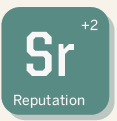
Sr: Social Reputation
Just as search engines don’t count all links equally, nor do they view all social accounts as being the same. That makes sense, since anyone can easily create a new account on a social network. What’s to prevent someone from making 100 different accounts in order to manufacture fake buzz?
Nothing, really, other than fake accounts like these can be easy to spot. They may have few “quality” friends in their network. Few might pass along material they share.
Ideally, you want to gain references from social accounts with good reputations. Having a social account with a good reputation of its own is great, too. So participate in the social world in a real, quality way, just as you would with your web site.
To understand more about how search engines are making use of social signals, see this in-depth report below:
Similar to links, while getting quality social shares is ideal, being shared widely on social networks by many is still helpful.
Again, participation in social sharing sites is crucial. If you don’t have a Twitter account, a Facebook fan page, a LinkedIn group, you’re missing out on opportunities to be easily shared. You’re not building up a network that can help spread the news.
What about Google’s recently launched Google +1? That is yet another form of social share, and one that Google says definitely is a factor in your favor for rankings.
To learn more about Google +1 along with other social sharing tips and social’s impact on search results, see the Search Engine Land articles below:


 The WordPress tips and hacks mentioned below apply to a self-hosted installation of WordPress. You may skip if your WordPress blog is hosted on WordPress.com and not WordPress.org.